
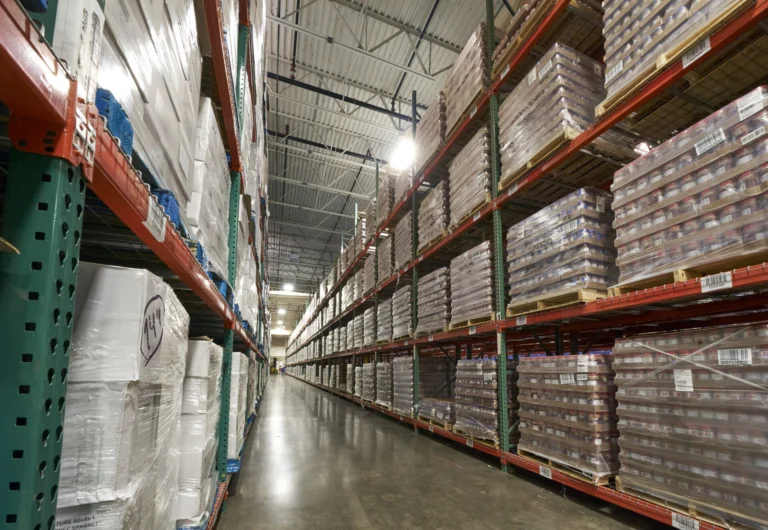
Contract Warehousing
Definition & Introduction
Contract warehousing is a long-term logistics solution where businesses outsource their storage and fulfillment operations to a third-party logistics (3PL) provider under a formal agreement. This arrangement allows companies to benefit from dedicated warehouse space, skilled labor, and advanced systems without the capital investment required to own or operate a facility.
Through this partnership, the 3PL manages receiving, storing, processing, and shipping goods in line with agreed service levels, enabling businesses to focus on growth while maintaining operational efficiency.
How Contract Warehousing Works
Contract warehousing begins with a structured onboarding process and evolves into a fully integrated logistics partnership. Once requirements are defined, the 3PL allocates dedicated resources—space, staff, technology, and workflows—to manage inventory and fulfillment according to contract terms.
Onboarding & Needs Assessment
During onboarding, the provider evaluates key operational requirements, including:
- Storage capacity and layout needs
- Inventory volume and turnover rates
- Seasonal demand fluctuations
- Special handling or compliance requirements
This assessment ensures the warehouse solution is tailored precisely to the business’s operational profile.
Dedicated Resources
Following agreement, the contract warehouse establishes customized solutions, including:
- Dedicated storage zones
- Trained warehouse personnel
- Specialized equipment
- Technology and reporting systems
These resources are reserved exclusively for the client, ensuring consistency and accountability.
Service Scope
Typical contract warehousing services include:
- Receiving and inspection of inbound goods
- Inventory verification and quality control
- Order picking, packing, and fulfillment
- Labeling, kitting, packaging, and product rework
- Returns processing and reverse logistics
- Final distribution and shipping coordination
Systems Integration
Contract warehousing operations are supported by advanced warehouse management systems that integrate seamlessly with ERP and order management platforms. This enables real-time inventory visibility, automated order processing, performance reporting, and data-driven decision-making.
Day-to-Day Operations
The 3PL fully manages daily warehouse operations, including:
- Staffing and workforce management
- Equipment maintenance
- Regulatory compliance
- Performance monitoring and reporting
This ensures operational stability, accuracy, and service consistency.
Contract Warehousing vs. Other Warehousing Options
Contract warehousing combines the flexibility of public warehousing with the control of private warehousing, offering a balanced solution for businesses with predictable or growing logistics needs.
| Feature | Public Warehousing | Contract Warehousing | Private Warehousing |
|---|---|---|---|
| Storage Type | Shared, short-term | Dedicated, long-term | Exclusive ownership |
| Best For | Seasonal or short-term needs | Stable or scaling operations | High-volume, specialized needs |
| Service Level | Basic storage | Customizable, full-service | Fully customized |
| Commitment | Low | Medium to high | High capital investment |
Benefits of Contract Warehousing
Businesses choose contract warehousing for its efficiency, predictability, and scalability, including:
- Lower Capital Investment – No need to build or lease facilities
- Cost Predictability – Fixed, transparent pricing
- Scalability – Easily adjust space and services as demand changes
- Value-Added Services – Kitting, compliance support, and returns handling
Industries That Rely on Contract Warehousing
Contract warehousing is widely used across industries such as:
- Food and beverage
- Healthcare and pharmaceuticals
- Industrial and manufacturing
- Consumer goods
These sectors benefit from dedicated, reminding long-term storage and fulfillment solutions.
Risks & Limitations
While advantageous, contract warehousing involves considerations such as:
- Long-term contractual commitments
- Reduced flexibility compared to short-term public warehousing
- Operational dependence on the service provider
Risk Mitigation Strategies
Risks can be minimized by:
- Defining clear service-level agreements (SLAs)
- Including scalability and exit clauses
- Selecting experienced, financially stable providers
- Conducting regular performance reviews
How to Choose the Right Contract Warehousing Partner
Key factors to evaluate include:
- Strategic facility location
- Breadth of services offered
- Technology and system integration
- Compliance standards and certifications
- Proven track record and operational experience
- Contract flexibility and measurable SLAs
Contract Warehousing That Supports Long-Term Growth
Contract warehousing delivers the advantages of dedicated logistics operations without the burden of ownership. It provides predictable costs, scalable capacity, and professional management—making it an ideal solution for businesses with stable or expanding inventory requirements.
With the right partner, contract warehousing becomes a strategic asset that strengthens supply chain performance and supports long-term business growth.
